How to Brief a Web Designer (so you actually get what you want)
Hiring a web designer can feel overwhelming. You have a budget (maybe), but you're not sure if it's reasonable. There are a million different offerings out there, wildly different price points, and before you know it you've spent three hours looking at beautiful websites and done absolutely nothing productive.
Here's the thing: the designers and agencies you'll love working with aren't looking for a perfect client brief. They're looking for someone who has done a little honest thinking about what they actually need. That's it.
Here’s how you get there.
Start with how your business actually runs
I know. I know. It's more fun to dive straight into inspiration. But before you go down that rabbit hole, spend twenty minutes answering these questions, and they'll save you a lot of back-and-forth later.
How hands-on do you want to be?Will you be updating your site regularly, or do you want to hand it off and not think about it? Your answer shapes everything from platform choice to how your site gets built.
What does your site need to do? Think operationally: Are you blogging? Selling products? Booking appointments? Collecting emails? Showcasing work? Building a community? List it all out.
Where are you now vs. six months from now? If your business is about to look significantly different, say so. A good designer can build for where you're going, not just where you are — but only if they know.
Do you need marketing and retention tools baked in? Email platforms, SMS, upsell flows, social feeds: some of these integrate more naturally on certain platforms, and it’s worth knowing upfront.
Once you have your answers, sort everything into two buckets: “need to have” and “nice to have”. This will become your north star when it's time to talk budget.
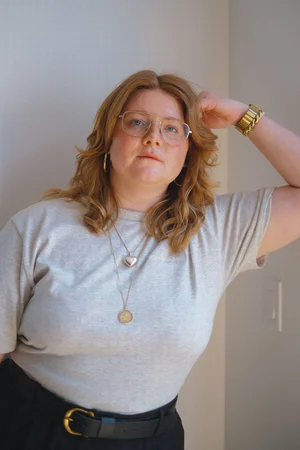
Yup, that’s me, your girl.
Set a real budget — and actually mean it
This is the part most people avoid, and it's the part that wastes the most time.
You don't need a precise number, but you need a number you're genuinely comfortable with. One based on what you make, what you plan to make, and what a functioning website is actually worth to your business. Larger brands sometimes allocate around 10% of annual revenue to a site rebuild because they've done the math on the return. You don't have to be that calculated, but it's a useful frame.
And please, if a designer's minimum is $25,000 and that's beyond your budget, just say so. You're not wasting their time by being honest; you're wasting both of your time by pretending it's fine. In my experience, designers who aren't the right fit will almost always point you toward someone who is. The industry is smaller than it looks.
For reference, you can take a look at my rates and process here.
Find your style
Now you can look at pretty websites. You've earned it.
A few places worth bookmarking:
As you save things you like, patterns will start to emerge: certain layouts, color palettes, the way content is organized. That's your visual brief taking shape.
You can also check the footer of sites you love as well. Designers and developers often leave credits there.
You don't need a mood board. A folder of screenshots and a few sentences about what draws you to them is plenty.
Reach out — and here's what to actually say
Once you've done the work above, you're ready to contact designers. Start with three. More than that gets overwhelming fast, and you'll lose track of who said what.
Keep a simple doc or spreadsheet to track rates, processes, and your gut feeling after each conversation.
When you reach out, keep it simple. Something like:
"I'm looking to build a [type of site] for my [type of business]. I need it to [key functions — e.g. sell products, book appointments, showcase my work]. My timeline is [rough timeframe] and my budget is around [range]. I'd love to connect if this sounds like a fit."
That's it. You can share inspiration and more detail once you're in conversation, but leading with clarity about your goal, your needs, and your budget will immediately set you apart from most inquiries designers receive.
Most designers will schedule a short intro or fit chat before any work begins. It's not a sales call (well, not only a sales call). It's a chance for both of you to make sure the match actually makes sense, so come ready to talk honestly about what you need and what you're working with.
A quick note on budget matching: if a designer's portfolio is full of Fortune 500 brands and global campaigns, their rates will reflect that. There's no shame in it. Save the inspiration for reference, and just keep scrolling until you find someone whose past work looks like the kind of business you are.
A note on the AI in the room
Yes, they exist. Yes, some of them are genuinely useful for getting something up quickly. If an AI website builder is the right fit for where your business is right now, use it.
But web designers and developers are spending real time thinking carefully about what makes the most sense for your brand specifically — your customers, your goals, your competitive space. AI can give you speed. It's less likely to give you someone who's personally invested in whether your site actually works for you.
Both have a place. Just know what you're choosing.
Thinking about a new site or a rebuild? Let’s have a quick chat.
I'm always happy to have an honest conversation about what makes sense, even if that's not working with me.
The Latest